May 6, 2025
Each day, I sit in my recliner in our living room, looking out our large window. With lush foliage and multiple bird feeders, our back yard is a sanctuary currently awash with a variety of our aviary friends.
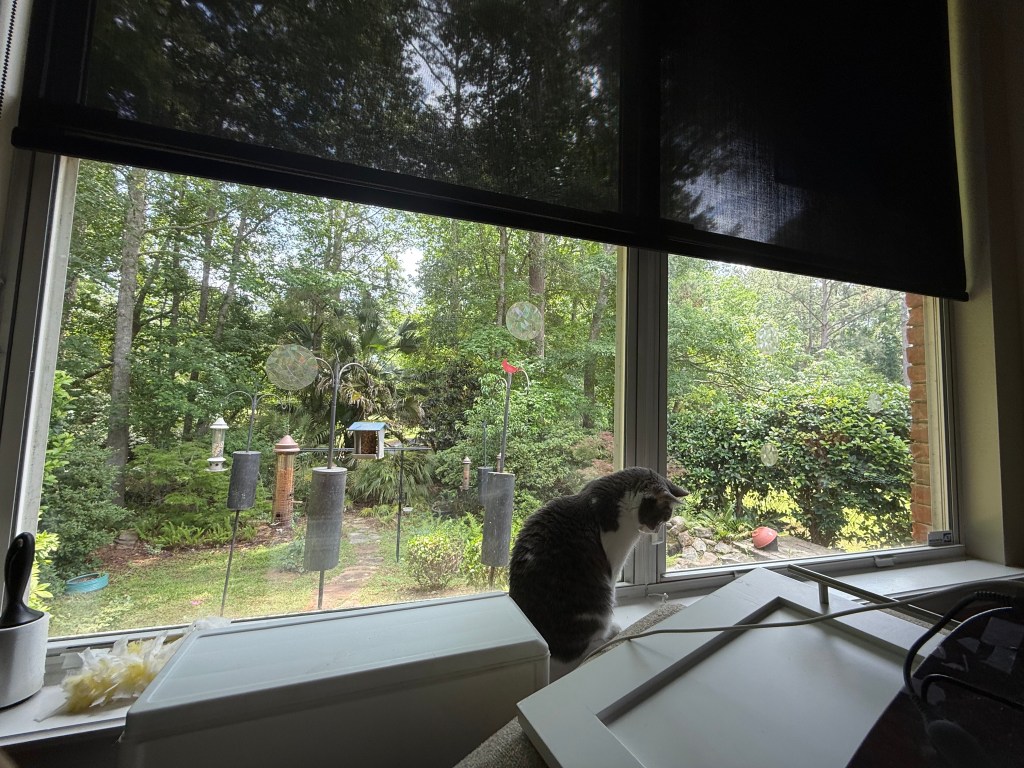
While the bird activity level ranges daily from calm to frenzy, about two weeks ago the bluebirds started behaving strangely. One would suddenly fly aggressively at our window, then hover, pecking furiously at the glass before darting away. Soon this behavior would be repeated by the same or a different bird, multiple times per day!
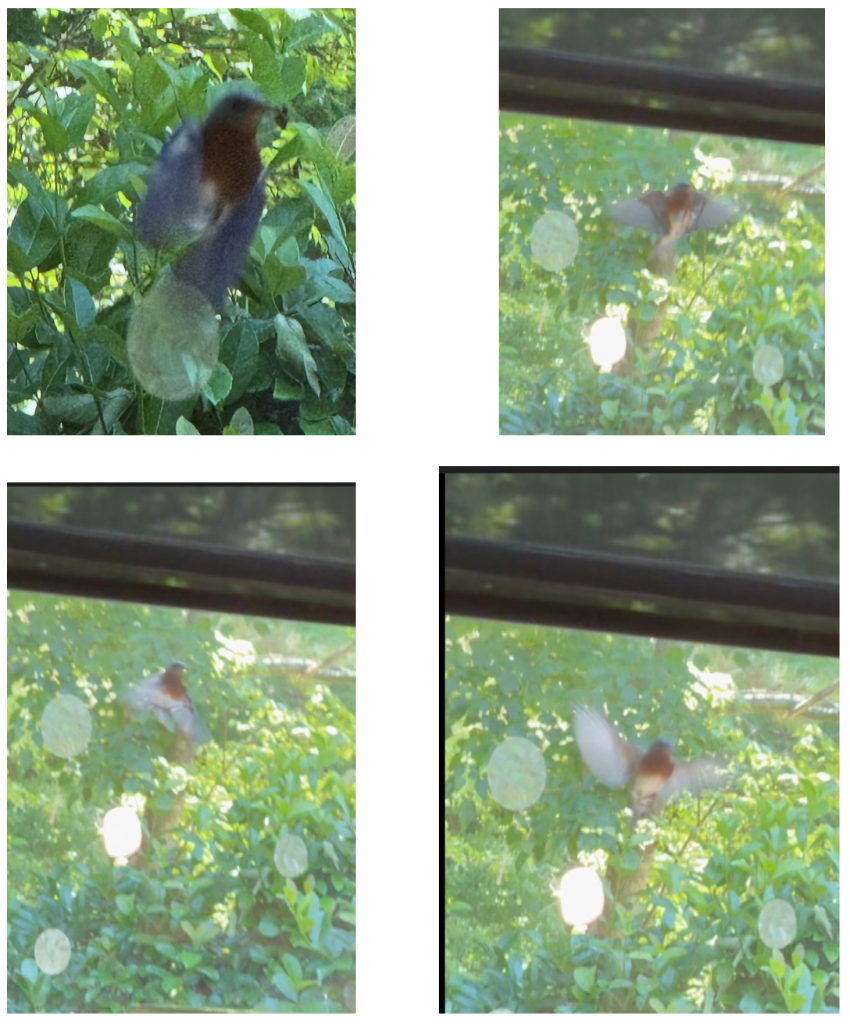
I quickly developed two main fears. First, that in repeatedly crashing into the window they were going to injure themselves or worse. And second, that the birds were spending so much time and energy on a useless pursuit they would not get their daily needs met.
But why the strange behavior?
My first theory was it might be time for the bluebirds to migrate and their path must lead right through our house! But my stepson Patrick used Google to research the behavior and discovered that springtime is mating season for bluebirds. Part of the ritual is that males will become territorial and attack other males to run them off.
I eventually realized that during the brightness of the day our large window, perfect for viewing from the dimmer inside, appears from the outside to be a mirror!
So the birds weren’t trying to fly through the window at all. They were seeing themselves in the mirrored window, thought they saw another male bird, and attacked! All of that time, energy, effort, and risk of injury wasted fruitlessly attacking an image of themselves.
After some experimenting, I found that shining bright lights in our living room helped balance the bright sunlight and make the window more transparent. While it didn’t totally eliminate the bird “attacks,” they did become far less frequent.
Coming to understand otherwise strange behavior of the birds started me thinking about a parallel for human beings. How often do we repeatedly bang our heads against a problem, trying to solve it again and again when what we’re doing clearly doesn’t work.
We could learn from the bluebirds.
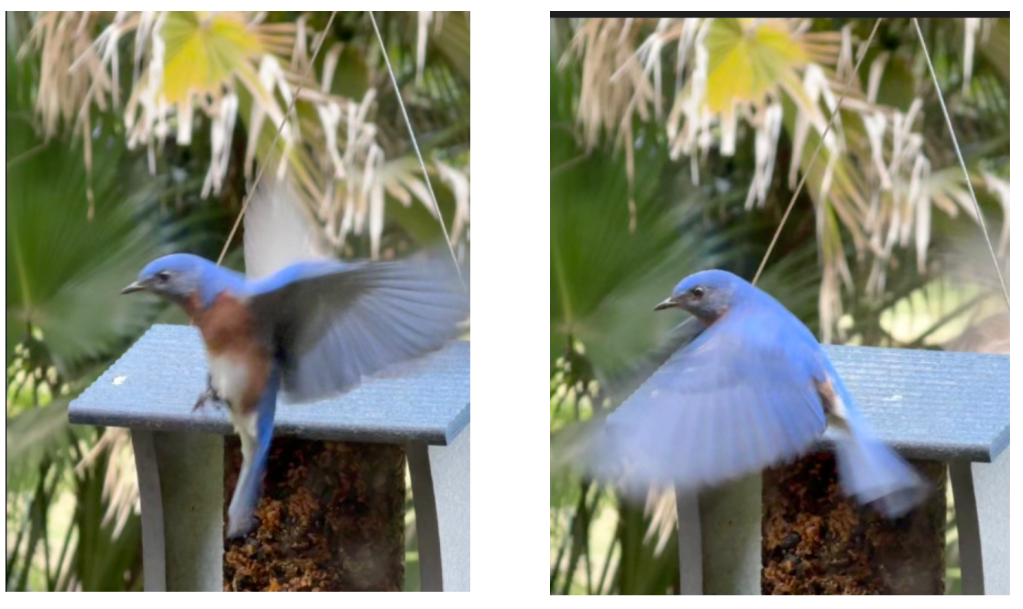
Maybe sometimes problems just need more light, or a different point of view. With more information and a shift in perception giving a comprehensive big picture of the problem, then perhaps a better solution will become clear.
Or possibly we’ll realize the problem is really insignificant and is best ignored.
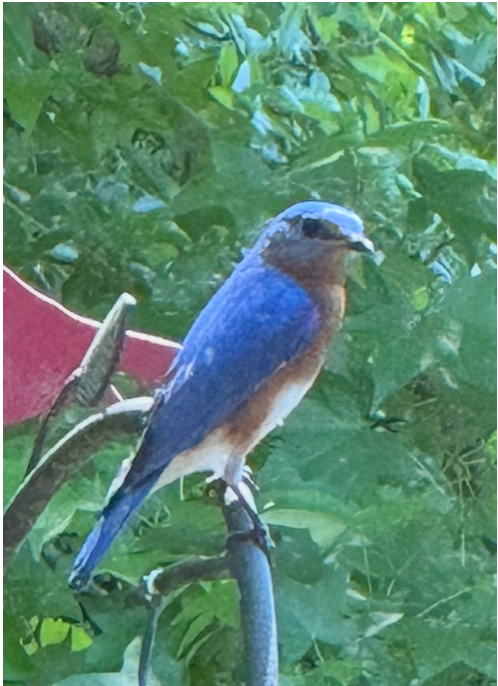
 My Life, by DAG